Idaho Police Warn New Bathroom Law Will Be Difficult to Enforce
What to Know
- Idaho law enforcement leaders repeatedly warned lawmakers that the state's transgender bathroom law would be difficult, if not impossible, to enforce because officers would have to investigate a person's sex assigned at birth and navigate numerous legal and practical complications.
- Despite those concerns, lawmakers approved the law, which makes it a crime to use certain restrooms or changing facilities that do not align with a person's sex assigned at birth, although a federal judge has temporarily blocked enforcement in some situations.
- Police agencies say they will enforce the law like any other complaint, but several departments acknowledged they were unaware of significant restroom-related incidents in their communities and expect enforcement challenges.
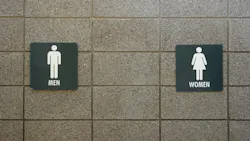
Idaho law enforcement officers repeatedly warned lawmakers earlier this year that their proposed transgender bathroom law would be nearly impossible to enforce.
The bill makes it a crime to “knowingly and willfully” use a restroom or changing room in a government-owned building or place of public accommodation that doesn’t align with a person’s sex assigned at birth.
The first offense is a misdemeanor. A second offense is a felony, with a maximum sentence of five years in prison.
Law enforcement officers said during legislative hearings that the bill would create an “unrealistic” and “absurd” burden on police. They would be expected to show up to a scene and visually determine someone’s sex assigned at birth, said Anthony Dahlinger, representing the Idaho Chiefs of Police Association. On top of that, the state already has laws in place on harassment or abuse in public and private spaces — a concern legislators said they were trying to address.
Idaho Fraternal Order of Police President Bryan Lovell told the Idaho Statesman that he’s not against creating a law that would prevent biological men from showering in women’s locker rooms — but the law as it’s written now is “problematic.”
And while he agrees with the Legislature and others in law enforcement that those should be safe spaces, he doesn’t see frequent problems there, either.
“You’ve got a few instances around that have different factors in them that have a little bit more nuance to them than just the one gender being in the wrong-gendered bathroom,” he said by phone. “There’s more to the story.”
Despite public concerns, Republican lawmakers pushed the bill through and argued they had faith in Idaho’s law enforcement officers to do their jobs.
The bill was supposed to go into effect July 1, but a judge issued a preliminary injunction days before, barring enforcement in some situations, but not completely.
Law enforcement agencies in the Treasure Valley told the Statesman that they will enforce this law the way they would any other: by responding in order of priority, investigating and recommending charges if necessary. But many of the local agencies also said they weren’t aware of issues with harassment or abuse occurring in restrooms in the past, and acknowledged the law will come with challenges.
What law enforcement agencies said
Shortly after Gov. Brad Little signed the bill into law, six transgender Idaho residents filed a lawsuit, alleging that the law violated the constitutional rights of transgender people and put their safety and well-being at risk. The lawsuit, which names Attorney General Raúl Labrador and county prosecutors, asked for a preliminary injunction — or a pause of the law — as it applies to restrooms.
Judge Amanda Brailsford last month issued a narrow injunction that prevents enforcement of the law in some situations. The plaintiffs were likely to succeed on their claim that the law was unconstitutionally vague, she added in her motion.
Under the injunction, transgender people can use single-user restrooms that align with their gender identity. If there is no single-user option available on the same floor the person is on, either because it doesn’t exist, is out of service or is occupied, a trans person can use the multistall bathroom that aligns with their gender identity. The injunction doesn’t apply to locker rooms.
Law enforcement agencies didn’t provide much information on how they would enforce the law, or how they would prove someone’s sex assigned at birth if they were called to a scene. They also largely didn’t comment on how they would specifically enforce the law in line with the injunction, which would require an officer to know whether there was a single-stall bathroom on the same floor as a multistall one, and whether it was occupied.
The Statesman reached out to the Boise, Meridian, Garden City, Caldwell and Nampa police departments, and the Ada and Canyon County sheriff’s offices, to ask how they planned to enforce this law.
The police departments in Meridian and Nampa said they were not aware of any problems of people being harassed or abused in restrooms in the past.
Meridian Police Department spokesperson Jordan Robinson said the department will work with its legal counsel on how to enforce the law.
“Law enforcement expressed its concerns with the enforcement of the law during the legislative session, and those concerns were clearly outlined in the injunction,” she said in an email to the Statesman. “Each situation is unique and different.”
She added that if police believe they can prove there has been a violation of the law, they have an “obligation to recommend charges accordingly.”
Nampa Police Deputy Chief Curt Shankel similarly said police would gather facts and send the information to the county prosecutor for their review .
“Biological sex may not be obvious,” he said in an email, “and we will have to rely on the investigative process and interviews.”
The calls will be answered in order of priority, like any other report, he said. He added that the department enforces laws created by the Legislature “impartially.”
“When we receive a call from the public, we will do our best to resolve the situation, with our community’s safety and security at the forefront,” he said. “In situations that don’t warrant immediate action, we will route the report to the (prosecuting attorney’s office for) review and potential action.”
Boise police will work with counsel and prosecutors to make sure enforcement is consistent, with the law and also protects people’s rights, spokesperson Haley Williams said.
“Due to the significant challenges with enforcing this law, our officers are receiving guidance on statutory changes and court decisions to ensure enforcement is fair, consistent, and legally sound,” Williams said in an email.
Officers worry about unintended consequences
The law as written carved out some exceptions, including allowing a person to use a restroom that doesn’t align with their sex assigned at birth in cases of “dire need” and if it is the only facility that is “reasonably available” at the time.
During the hearing for the preliminary injunction, attorneys representing the plaintiffs said this law could make it easier for people to enter restrooms with the intent to harm someone.
Lovell echoed those concerns, saying it could make it more difficult for law enforcement officers to charge someone who is entering a bathroom with the intent to do wrong, given that it carves out specific exceptions for “dire need.”
“And they say, ‘Well, I had to go to the bathroom real bad,’ ” he said. “That could derail us from really taking care of the important problem here, so you know that that’s a worry from our end.”
The law could also result in people being policed based on what they look like, and whether their appearance conforms to gender stereotypes.
Lovell said police would treat an allegation like any other crime.
“We don’t just enforce laws and pick and choose, we have to meet the elements of that, and then prosecutors are the ultimate ones that make the charging decision,” he said.
But people who report someone to law enforcement or get reported themselves aren’t going to be frustrated with legislators when the law isn’t being enforced the way they’d like, he said.
“They get mad at us,” he said. “So we’re trying to mitigate other problems associated with that.”
Labrador’s office appealed the ruling in July. He had previously called the injunction a “results-driven decision that misapplies the law, confuses the issues, and misrepresents the position of the State.”
“Biological sex is not vague, and neither is this law,” he wrote in a post on X.
During the court hearing, Idaho Solicitor General Michael Zarian, who was representing Labrador and county prosecutors, mentioned DNA testing when asked how a person could prove their sex assigned at birth. Specifically, Zarian argued that “law enforcement could use DNA testing to prove biological sex,” Brailsford wrote in her order. Law enforcement can’t collect DNA without consent or a warrant, unless the person is convicted of certain crimes.
In an email to the Statesman earlier this month, Labrador’s office disputed that statement.
“Solicitor General Zarian never said that law enforcement would enforce the law through DNA testing,” spokesperson Damon Sidur said in an email to the Statesman. “He explicitly said that no one is talking about conducting DNA tests on the spot. His point was about biological reality and whether the statute provides an objective standard, not about law enforcement tactics.”
During the legislative session, Dahlinger said state law already gives law enforcement and private citizens a way to “address and remedy an individual’s unwanted and disruptive presence on public or private property.”
“With the existence of a lawful remedy for law enforcement to address an individual’s unwanted presence already established,” he told lawmakers, “House Bill 752 would create more problems rather than solutions.”
_____________
©2026 The Idaho Statesman.
Visit idahostatesman.com.
Distributed by Tribune Content Agency, LLC.