As Texas Communities Remove Flock Cameras, Some Houston Residents Want More
What to Know
- Some Houston-area residents say Flock license plate reader cameras help deter crime, illegal dumping and reckless driving, and give police valuable investigative leads.
- Privacy concerns are fueling a backlash, with state officials, local leaders and civil liberties advocates warning the cameras can create broad vehicle-tracking networks and be vulnerable to misuse.
- Several Texas cities and agencies have removed or scaled back Flock cameras, but many police leaders and community members argue the crime-fighting benefits outweigh the privacy risks when safeguards are in place.
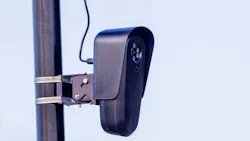
Fred Woods understands why so many people object to Flock cameras in their community, but his northeast Houston neighborhood has constant problems with drug dealing, vandalism and illegal dumping – and he thinks the cameras can help.
“If these can do something about that and bring a sense of security, we need it,” Woods said.
While many others want to remove the cameras along Houston streets, Woods wants more of them. Standing at the corner of Homestead and Hopper roads, in the shadow of the community’s one Flock camera, Woods – former president of the local civic club and an active member of several Northwood Manor community groups – can point down the street and recount when the church to the south was burglarized, then north to a vacant market that is now an illegal dumping ground.
Then there is the fence just behind him, dented yet again from when someone driving too fast missed the turn at Hopper and cruised head-on into the iron railing.
Three more streets have the same issue – along with problems related to speeding, people fleeing from petty crimes and other situations where police can only do so much and respond after the incident, Woods said.
The camera close to Woods and many others are in peril as communities reevaluate their contracts with Flock and other companies. Local and state leaders have turned hundreds off in Texas as concerns about privacy prompt their shutdown. Gov. Greg Abbott rescinded state funding for cameras, including more than 200 in Houston, while cities surrounding Houston and portions of Harris County have covered up their cameras or voided the contracts altogether.
Critics note the cameras are always lurking, looking and recording. Woods’ reply is that is exactly what they are meant to do.
“When I see the cameras, I am relieved because the police have a means to catch that person,” he said.
Others agree, saying the people in their community who do not want the cameras are those doing the things the cameras are intended to see – such as driving recklessly and illegally dumping everything from household trash to refrigerators on dead-end streets and in vacant lots.
“The cameras serve a good for all,” said Johnny Standifer, minister at Northwood Manor Church of Christ, just blocks from Woods’ home, along a busy stretch of Homestead.
The church has its own security cameras to deter vandals and thieves, but Standifer said Flock cameras provide even more security, calling them a “blessing” that can aid police without blanketing the neighborhood in patrols.
Rather than an intrusion or invasion, Standifer said the cameras are a deterrent to bad behavior.
“We need more cameras and more of this so everybody is on the same page,” he said.
‘Massive dragnet’
Flock is not without its powerful dissenters.
Local, state and federal officials have raised alarms about potential privacy loss from a national system of cameras capable of tracking any and all Americans regardless of whether they are suspected of a crime. U.S. Sen. Josh Hawley, R- Mo., called the system a “massive dragnet,” which lawmakers will likely rein in.
“You know, this is still the United States of America, and it shouldn't be that when you walk out your door in the morning, you just have to agree and assent and accept the fact that you're gonna be on camera morning, noon and night,” Hawley said during a Sept. 23 Senate Judiciary Committee hearing.
Hawley said the technology is far more sweeping than many Americans realize.
“Flock can tell you if a car has a (Donald) Trump sticker or a (Kamala) Harris sticker or a pro-life America sticker or an NRA sticker. It's really quite extraordinary,” Hawley said.
State officials also have joined the anti-Flock chorus, with Comptroller Don Huffines banning the use of grant money for Flock purchases.
“The government has no business tracking where law-abiding Texans drive. Doing it without a warrant is a clear violation of the Fourth Amendment of the Constitution,” Huffines said in a release. “Texans should be able to drive to work, to church or to the grocery store without a government camera logging it in a database.”
In Harris County, 56% of residents oppose use of the cameras for law enforcement, while 40% support them, according to a poll released Oct. 13 by the Hobby Center at the University of Houston.
Alarm at Flock’s capabilities – years after many of its devices went into service – has led to a recent reduction in cameras across the Houston area. Manvel and Magnolia ended their contracts with Flock in the past two months. Residents in a half dozen more cities are seeking some scaling back of camera use.
In western Harris County, Pct. 4 Commissioner Lesley Briones decommissioned and covered 48 cameras and 13 license plate readers posted on county property after pushback from residents.
"Nothing is more important to me than the safety and security of Harris County residents," Briones said in a statement. “Safety and security includes protecting their privacy and the privacy of their families.”
‘Benefits outweigh the risks’
Police and many local officials remain supportive of the cameras because of the potential to quickly find stolen vehicles or cars related to missing persons cases. In a statement released jointly on Sept. 26, three Houston City Council members urged the city to keep the system but have “strong departmental oversight.”
“We cannot remove such a critical crime-fighting tool because of the possibility of misuse,” Council Members Fred Flickinger, Willie Davis and Twila Carter wrote. “Instead, we should require stringent safeguards … Public safety and individual privacy do not have to be competing priorities.”
Houston police have not updated policies since 2021 when the department first signed on with Flock. HPD leadership said searches are reviewed in batches, and officers are expected to list a reason for the search when conducting it or adding a plate to the “hot list” where the Flock system can alert if a certain plate is seen by any of the cameras linked to the department’s account.
Police departments can share their information with as many departments as they choose, based on the terms of their contract. In the case of Houston and many surrounding agencies, they have sharing agreements through Flock with thousands of departments nationwide and can conduct virtually any search within their own city, across the state or nationwide – giving officers the discretion to do so.
Woods agrees that it is a sprawling tool, one which needs guardrails to make sure police do not abuse it.
Isolated cases of misuse have occurred in the Houston area, including a Fort Bend deputy who made nearly 200 unauthorized searches and a Pasadena sergeant who used the system to stalk a female officer.
Woods said the incidents should not be a reason to shut down all the cameras when they are doing some good.
“I get it, but we can work on that,” Woods said of the incidents of misuse by officers. “There are always bad apples out there, and that is why you have a policy in place for accountability.”
‘Makes me feel safer’
For Woods, the issue is as simple as looking around his neighborhood, where those with the means have installed cameras to protect themselves – himself included.
His property is dotted with cameras, giving him eyes from one side to the other, along with a view of the street in front of him and the houses across the street. The devices have come in handy, Woods said, displaying on his phone the car that burst through his fence a few months back, police chases up and down the residential street near Homestead and even a SWAT situation across the street.
“The camera makes me feel safer,” he said of his personal security system, adding that it also helps police in a neighborhood where cooperation – he hates to admit – is not universal.
“We suffer from a culture that lends to not reporting, no snitching,” he said. “It can have consequences, and tools like Flock cameras and drones help police out when people won’t.”
Woods’ neighborhood is not the most crime-riddled in Houston, but it has more crimes than most, based on a review of Houston police crime reports. Some petty crimes, as well as violent crimes such as assaults and forcible rapes, are reported more in the police beat encompassing Northwood Manor and surrounding area, compared to the city’s other 129 police beats.
The first time he saw one of the cameras, Woods said he encouraged police to put in as many as they could. Within weeks, he said problems such as racing up and down Homestead declined, which he credits to the camera.
“It is a deterrent, even if it doesn’t catch someone doing something,” he said.
Whether it changes behavior or catches people in the act, both outweigh privacy concerns, says Woods.
“I think of it like a doctor prescribing medicine,” Woods said. “The benefits outweigh the risks.”
__________________
© 2026 the Houston Chronicle.
Visit www.chron.com.
Distributed by Tribune Content Agency, LLC.